Same-Day CEREC Crowns vs. Traditional Lab Crowns
How Same-Day CEREC Crowns and Traditional Crowns Work
A dental crown covers and protects a tooth that has lost too much structure to be restored with a filling. The main difference between same-day CEREC treatment and a traditional crown is how the restoration is designed, made, and delivered. Both approaches begin with an examination and tooth preparation, and both require careful attention to the bite. The right choice depends on the tooth, the treatment plan, and the dentist's judgment.
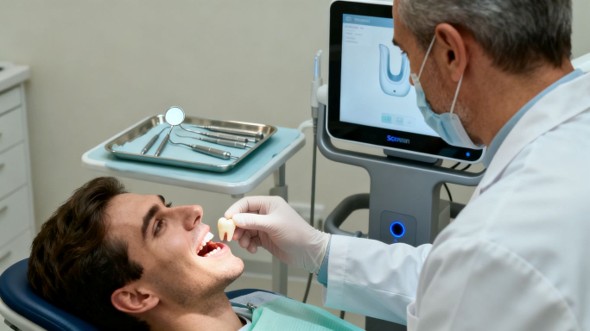
CEREC technology allows a dentist to use digital information to design a crown, create it in the office, and place it during one appointment when the case is appropriate. The tooth is prepared first, then the dentist evaluates the proposed shape and fit before final placement, which can remove the waiting period between preparation and delivery. Our office technology page has more on the digital equipment we use for same-day restorations.
A traditional lab crown usually begins with an impression or digital scan after the tooth has been prepared. The information goes to a dental laboratory, where a technician makes the permanent restoration according to the dentist's prescription, and the finished crown returns to the office for a later fitting and cementation appointment.
Either way, a crown restores the outside shape of a weakened tooth and helps it participate in normal chewing, and it can also improve the appearance of a tooth that is badly discolored, fractured, or extensively restored. The material and production method differ, but the clinical purpose is broadly similar: protect the remaining tooth while rebuilding its form.
The Role of Digital Scans, Impressions, and Bite Analysis
Scans and impressions provide the information used to plan the restoration, while bite analysis helps the dentist check how the crown will meet the opposing teeth. Digital scans may be more comfortable than traditional impression material, although either method can provide useful records. Careful adjustment remains essential because a technically accurate crown still needs to feel natural in the patient's mouth.
Comparing the Treatment Timeline
Time is often the first reason people ask about same-day crowns. A one-visit approach can be convenient, but the appointment may still include examination, numbing, preparation, scanning, design, fabrication, and placement, and it may take several hours depending on the tooth and the complexity of the case.
Traditional treatment spreads those steps across visits, allowing laboratory work to happen between them; the interval gives the laboratory time to fabricate the restoration and gives the office time to review it. Neither timeline is automatically better for every tooth.
A temporary crown is commonly used when the permanent restoration will be made outside the office. It protects the prepared tooth and helps maintain appearance and function during the laboratory interval, though it is not intended to replace the final crown, so patients usually receive instructions about chewing and care.
A same-day appointment may take longer or be postponed if the tooth needs additional treatment, the scan is difficult to capture, or the fit requires redesign, and traditional treatment can also be delayed by an incomplete preparation or a laboratory adjustment. A careful dentist will prioritize a sound result over an advertised deadline.
Differences in Materials, Appearance, and Fit
Crowns can be made from several types of ceramic, porcelain-based materials, metal alloys, or combinations of materials. The best material depends on location, available space, bite forces, cosmetic goals, and the amount of tooth remaining. Fit is influenced not only by the material but also by preparation quality and the dentist's final adjustments — a fast fabrication method does not remove the need for clinical judgment.
CEREC crowns are commonly associated with ceramic restorations made from a block selected for the clinical situation and desired appearance; the dentist chooses the material and shade based on the tooth and surrounding smile.
Dental laboratories may work with porcelain-based ceramics, zirconia, metal alloys, or layered combinations, depending on the prescription, and each material has different strengths in appearance, wear resistance, thickness, and repairability — a laboratory crown may therefore offer a broader range of material choices in some cases, though the dentist still determines what is suitable.
Digital design lets the dentist review the proposed crown's contours before it is placed, but the design is not self-correcting: the dentist must still evaluate contacts, margins, chewing surfaces, and comfort in the mouth, and small refinements to shape or bite may be needed before the crown is permanently seated. Either approach can produce a natural-looking crown when the material, shade, contour, and finishing are well chosen.
Comparing Cost, Insurance, and Overall Value
The price of a crown is shaped by more than whether it is made in a dental office or laboratory. Tooth location, preparation complexity, material, additional procedures, geographic area, and the dentist's fees all play a part. The price of a CEREC crown may reflect the equipment, materials, clinical time, design work, and placement involved in the appointment — a simple case may require less chair time than a difficult one, while a tooth needing buildup or additional treatment will add to the total.
A traditional lab crown may include the preparation visit, impressions or scans, temporary crown, laboratory fee, final placement, and any necessary adjustments, and the laboratory's material and design requirements can influence its portion of the cost.
Dental plans often classify crowns as major restorative care, but coverage depends on the policy, waiting periods, annual limits, deductibles, and frequency rules, and some plans may pay toward a crown without covering every material or every associated service. Our insurance page outlines the plans we work with, and the office can help clarify benefits, though the patient remains responsible for confirming the plan's details.
One visit may also reduce time away from work, travel, childcare needs, or the inconvenience of arranging multiple appointments, and those indirect savings can matter even when the billed treatment fee is similar. Useful questions to ask include how many visits are expected for the tooth, whether a temporary crown will be needed, what services and adjustments are included in the estimate, and how the treatment will interact with insurance benefits.
Durability, Maintenance, and Long-Term Performance
A crown's lifespan depends on material, tooth condition, bite forces, hygiene, and regular dental care. The way it is designed and bonded matters as much as the name of the production system, and no crown is indestructible — even a well-made restoration can be affected by grinding, decay at the margin, or trauma. Same-day CEREC crowns may provide long service when the tooth is properly prepared, the crown is suitable for the bite, and the patient maintains good oral hygiene, and traditional lab crowns can also remain functional for many years when they are well fitted and cared for.
A laboratory-made crown is not automatically more durable simply because it was made outside the dental office; follow-up examinations help the dentist monitor either type of crown, its edges, and the surrounding tooth over time.
Certain habits place unusual stress on any crown and may shorten its service life, including chewing ice or very hard objects, opening packages with the teeth, biting pens or fingernails, and ignoring nighttime grinding or clenching. Reducing these stresses does not guarantee that a crown will never chip or loosen, but it can lower avoidable wear, and a night guard may be discussed when grinding is a concern.
Pain when biting, a persistent high spot, looseness, rough edges, sensitivity, or food catching near the crown should be checked promptly, since these symptoms may reflect a simple bite adjustment or something more, such as decay, a crack, or gum irritation.
Who May Be a Good Candidate for Each Option
Candidate selection begins with the condition of the tooth rather than a preference for speed. The dentist considers remaining tooth structure, gum health, infection, bite, appearance, and the desired material. A CEREC crown may suit a tooth that can be prepared, scanned, designed, and restored predictably in one visit, and it may appeal to someone who values fewer appointments and whose tooth does not require a more specialized laboratory process.
A traditional lab crown may be considered when the case needs a particular material, detailed cosmetic work, or laboratory input beyond the planned office workflow, or when several restorations must be coordinated across the smile.
A tooth with deep decay, an infection, inadequate support, or a fracture extending below the gum may need treatment before it can receive a crown at all. That may include a buildup, root canal treatment, periodontal care, or removal of the tooth, depending on the findings — a crown should protect a viable foundation, but it cannot solve every underlying problem.
When less of the tooth is affected, a tooth-colored filling rather than a full crown may be enough. Back teeth often experience substantial chewing forces, while front teeth place greater demands on translucency and visible shape, and clenching, grinding, limited space, and an uneven bite can influence both the material and the production method the dentist recommends.
Choosing Between CEREC and a Traditional Lab Crown
The best comparison is not simply one visit versus two. It is a comparison of clinical fit, material options, appearance, cost, durability, and the dentist's ability to deliver the planned result. Patients should feel comfortable asking for a plain explanation of why one approach is being recommended — a measured conversation often reveals that the decision is less complicated than it first appears. Ask which materials are available, how the dentist evaluates the bite, and whether the proposed crown will be designed and reviewed in the office or by a laboratory, and it is also reasonable to ask how often adjustments are needed and what follow-up is included.
Speed may be especially useful when work, travel, or distance makes another appointment difficult, while customization may matter more when the tooth is highly visible, the bite is demanding, or several restorations must match. Convenience should support the treatment plan, not determine it before the tooth has been evaluated.
Your dentist can compare the tooth's condition, bite, cosmetic needs, material choices, expected visits, insurance benefits, and total fee, and the better choice is the one that offers a sound restoration while fitting your health needs, schedule, and budget.
Conclusion
CEREC and traditional lab crowns can both restore damaged teeth, but they organize the work differently. A same-day option may reduce appointments, while a laboratory crown may offer advantages when material selection or detailed customization is central. A careful examination, transparent estimate, and realistic discussion of your bite and tooth condition will lead to a more useful decision than speed or price alone — our Contact Us page is the best place to start if you think you may need a crown.
Frequently Asked Questions
Are same-day crowns as strong as traditional lab crowns?
Strength depends on the material, tooth preparation, bite, bonding, and daily habits. Neither production method guarantees the same result for every patient.
Does a same-day crown always take only one hour?
No. A same-day appointment may take several hours because it can include preparation, scanning, design, fabrication, fitting, and placement.
Will I need a temporary crown?
A temporary crown is commonly used when the permanent restoration is made by an outside laboratory. It may not be needed when an appropriate crown is designed and placed during the same visit.
Can any tooth receive a same-day crown?
Not necessarily. Tooth damage, infection, limited space, bite forces, cosmetic demands, and the need for specialized materials can affect candidacy.
Does insurance cover same-day crowns?
Coverage depends on the dental plan, its rules, deductibles, limits, and covered materials. The insurer and dental office can help explain the expected benefit.
How should I care for a crown?
According to the American Dental Association, a crown helps restore a tooth to its normal shape, size, and strength. Brush, floss, attend regular dental visits, and avoid chewing ice or other very hard objects, and contact the dentist if the crown feels loose, painful, rough, or high when you bite.
Which crown option is best for me?
The best option depends on the tooth, bite, appearance goals, material needs, schedule, and budget. Your dentist can compare those factors and explain the reasoning behind the recommendation.
About the Author
Loudoun Innovative Dentistry is located at 24305 Liberty Harvest Ct #110, Arcola/Dulles, VA 20166, serving Brambleton, Ashburn, Aldie, Broadlands, and the surrounding Loudoun County communities. The practice is led by Dr. Abdullah Mahgoub, DDS, who completed his Advanced Education in General Dentistry (AEGD) at Columbia University in New York and offers both same-day CEREC crowns and traditional laboratory crown options depending on each patient's case.
Disclaimer
The information provided in this article is for educational purposes only and does not constitute professional medical or dental advice, diagnosis, or treatment recommendations. Whether a same-day CEREC crown or a traditional lab crown is right for your tooth can only be determined through an in-person dental evaluation. Always consult your dentist with any questions regarding your treatment options.
Blog Post Author

Contributed by DentalROI
DentalROI provides relevant dental content to help providers educate patients. The statements, services, and products referenced in this article have not been evaluated by the Food and Drug Administration, and they are not intended as a substitute for professional medical advice, diagnosis, or treatment. Always seek the advice of your dental provider with any questions or issues you may have. Specific recommendations may vary in different circumstances, so individual consultation is important.