
How to Clean Invisalign Aligners the Right Way
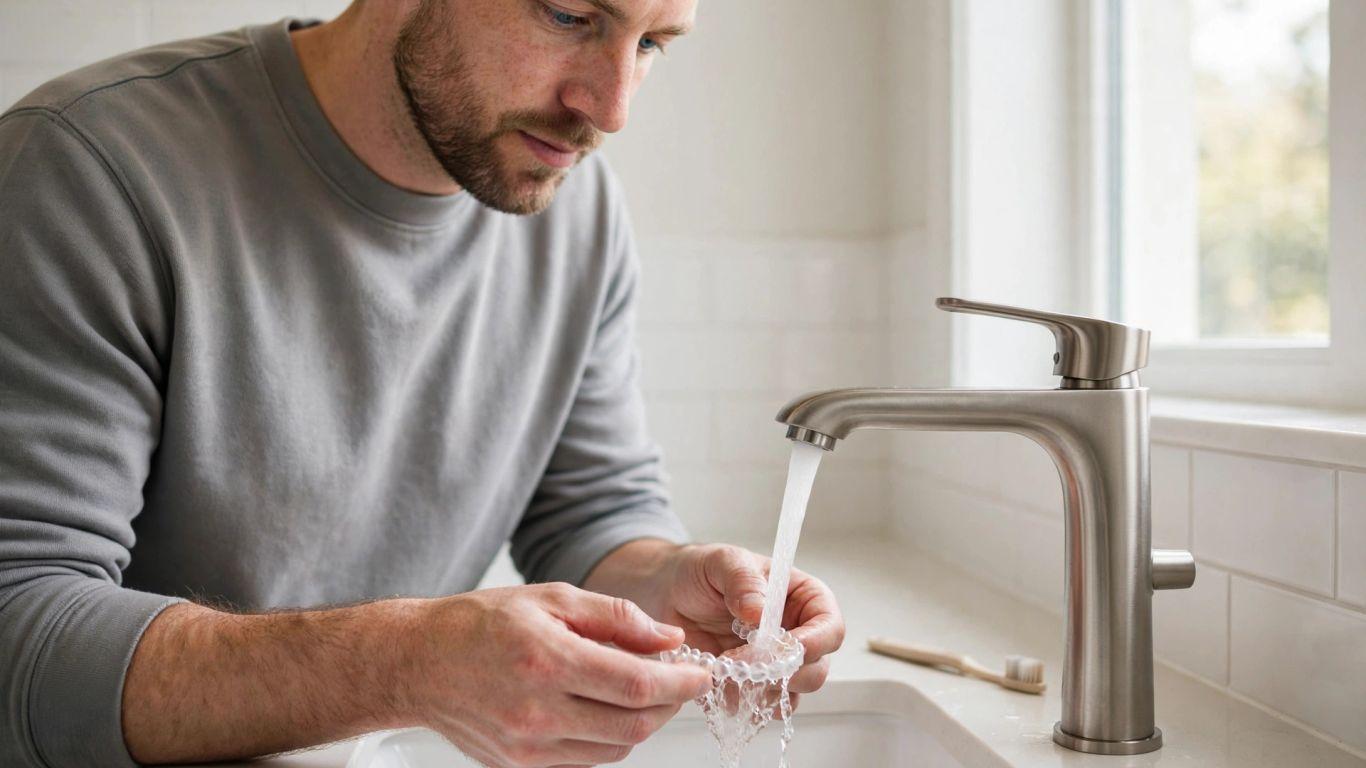
How to clean Invisalign aligners as part of your daily routine
A simple routine makes it easier to keep aligners clean between meals and throughout the day. When you take them out, rinse away saliva and loose debris, then give them a gentle clean before wearing them again. These small steps are the everyday basics of how to clean Invisalign without making the process complicated. If you are considering treatment, learn about our clear aligner treatment.
Rinse aligners with lukewarm water whenever you remove them
Rinsing soon after removal washes away saliva and loose residue before it has time to dry on the plastic. Use lukewarm water rather than hot water, and make sure the rinse reaches both the inside and outside surfaces.
Brush gently with a soft toothbrush
A soft toothbrush can help lift residue from the aligner’s surface and around its edges. Use light pressure and a brush kept for aligner cleaning. Gentle, consistent cleaning is a better approach than trying to remove buildup with force.
Use clear, unscented soap to remove buildup
If you use soap, choose a small amount of clear, unscented soap and work it over the aligner with a soft brush. Strong scents and dyes can linger, so a plain option is less likely to leave a noticeable taste or tint. Rinse well afterward.
Clean aligners before putting them back in
Before reinserting an aligner, check that it looks and feels clean, with no visible residue or soap left behind. If you can’t clean it right away, rinse it when practical and return to your usual routine as soon as you can.
Choose a cleaning method that suits your routine
Some people prefer a quick rinse, while others build a soak into a regular part of the day. Choose a method that fits your schedule and follow the directions for any cleaning product you use.
Use Invisalign Cleaning Crystals according to the package directions
Invisalign Cleaning Crystals are used by dissolving a packet in warm water, placing the aligners in the solution, and following the package directions. Those directions describe a 15-minute soak, with agitation before and after the wait, followed by a thorough rinse.
Consider an aligner-safe cleaning solution
If you’re comparing cleaning approaches, think about how much time and equipment each one requires.
| Approach | What it involves | Helpful consideration |
|---|---|---|
| Rinsing | Running lukewarm water over the aligners | Convenient when you need a quick refresh |
| Gentle brushing | Using a soft brush with a mild, clear soap | Allows you to clean surfaces directly |
| Soaking | Placing aligners in a suitable cleaning solution | Follow the product’s directions for use and timing |
If you’re unsure whether a particular cleaner is appropriate, ask your orthodontist rather than experimenting with a household product.
Soak aligners only for the recommended time
A soak should last only as long as the cleaning product’s instructions specify. For example, Invisalign Cleaning Crystals direct users to let the aligners stand in the solution for 15 minutes.
Rinse thoroughly after soaking
Once a soak is complete, rinse the aligners well under clean water before wearing them. A careful rinse clears away cleaning solution and leaves the aligners ready to handle.
Avoid products and habits that can damage aligners
Aligners are made to fit closely, so heat, rough scrubbing, and unsuitable cleaners are best avoided. When in doubt, keep the routine mild and ask your orthodontist.
Keep aligners away from hot or boiling water
Hot water can change the shape of plastic, so use lukewarm water for rinsing and cleaning instead. Don’t pour freshly boiled water over aligners or place them in a hot container.
Skip abrasive toothpaste and hard-bristled brushes
Abrasive toothpaste and stiff bristles can be too rough for regular aligner cleaning. Choose a soft toothbrush and avoid vigorous scrubbing, particularly along the edges.
Avoid colored or scented soaps and mouthwashes
Colored or strongly scented products may leave a tint, taste, or film on the aligners. Mouthwash is made for rinsing the mouth, so don’t assume it is a substitute for a cleaner intended for aligners.
Don’t use household cleaners or bleach
Household cleaning products and bleach are not appropriate substitutes for an aligner cleaner. They can be harsh and may leave residue behind.
Keep aligners clear and fresh
Residue is easier to address when it hasn’t been sitting on the aligners for long. Paying attention to changes in appearance or smell can help you notice when your routine needs attention.
Remove food and drink residue before it hardens
After eating or drinking, rinse your aligners as soon as it’s practical. If you’ve been unable to clean them for a while, use your usual mild method rather than scraping at the surface.
Clean aligners promptly if they look cloudy
Cloudiness can be a cue to check whether residue has built up. Rinse them, then gently brush or use a suitable cleaning product according to its directions. If they still look cloudy, ask your orthodontist before trying stronger methods.
Address odors with regular cleaning rather than masking them
A lingering odor is a reason to revisit the cleaning routine, not to cover the smell with a scented product. Rinse the aligners, clean them gently, and rinse again.
Check for cracks, warping, or persistent buildup
If you notice a crack, a change in shape, or buildup that doesn’t respond to your usual gentle routine, contact your orthodontist instead of trying to repair or scrape the aligner yourself.
Handle and store aligners safely
The way you handle and store aligners matters, too. A clean case gives removed aligners a predictable place to go. Regular dental exams and cleanings also support healthy teeth during treatment.
Wash your hands before handling them
Wash your hands with soap and water before removing, cleaning, or putting in aligners.
Put removed aligners in their case
A case helps keep aligners together and protected while they’re out of your mouth. A few small habits make it easier:
- Choose one familiar place to keep the case when you’re at home.
- Put the aligners directly into the case after removal.
- Close the case before moving on to your next task.
Keep the case clean and dry
Rinse and clean the case regularly, then let it dry before storing aligners inside. Avoid using harsh cleaners unless its instructions say they are suitable.
Don’t wrap aligners in a napkin or leave them exposed
A napkin is easy to mistake for rubbish, and an exposed aligner can be knocked onto a dirty surface or misplaced. Use the case instead.
Adjust your cleaning routine when you’re away from home
Being away from your usual sink or supplies doesn’t mean you need to abandon your routine. A little preparation makes it easier to rinse, store, and clean aligners without improvising with unsuitable products.
Rinse aligners when you can’t brush them right away
If brushing isn’t possible after removal, rinse the aligners with lukewarm water when you can. When you’re back somewhere comfortable, use your usual gentle method before wearing them again.
Carry a travel case and a soft toothbrush
Keeping a case and a soft toothbrush in your bag can make your routine easier to maintain while you’re out. You might pack a few basics together:
- A clean aligner case
- A soft toothbrush set aside for aligner cleaning
- Clear, unscented soap, if that’s part of your usual routine
- A small bottle of water for rinsing when needed
Use a clean container if you need to soak them
If you need to soak aligners away from home, use a clean container and follow the cleaning product’s directions. Rinse them thoroughly before putting them back in.
Ask your orthodontist about stubborn stains or damage
Persistent stains, cracks, or a change in shape are reasons to check in with your orthodontist. Avoid trying to fix the problem with abrasive tools, heat, or stronger household cleaners. After treatment, see our information on retainers.
Conclusion
A good aligner-cleaning routine can stay simple: rinse after removal, clean gently, follow directions for any soaking product, and store the aligners in their case. Avoid heat and harsh cleaners, and ask your orthodontist about damage or buildup that doesn’t respond to regular care. For general background on tooth straightening, see the American Dental Association’s orthodontics overview. Questions? Contact Loudoun Innovative Dentistry.
Frequently Asked Questions
How often should I clean my aligners?
Clean them regularly as part of your daily routine, and rinse them when you remove them if practical. Follow the directions for any cleaning product you use.
Can I use toothpaste to clean aligners?
Abrasive toothpaste may be too rough for aligners. A soft toothbrush and a gentle, suitable cleaning method are preferable.
Is hot water safe for cleaning aligners?
Avoid hot or boiling water because heat can affect the shape of plastic. Use lukewarm water for rinsing and cleaning.
Can I soak aligners overnight?
Use only the soak time specified by the cleaning product’s instructions. Don’t leave aligners in a solution longer than directed.
What should I do if my aligners smell?
Clean them regularly instead of trying to mask the odor with scented products. If the smell persists despite your usual cleaning routine, ask your orthodontist for advice.
How should I store aligners when I take them out?
Put them in their case rather than wrapping them in a napkin or leaving them exposed. Keep the case clean and dry.
What if my aligners look cloudy or damaged?
Try your usual gentle cleaning method for cloudiness, but don’t scrape or use harsh cleaners. Contact your orthodontist if cloudiness persists or you notice cracks or a change in shape.
About the Author
This article was prepared for Loudoun Innovative Dentistry, 24305 Liberty Harvest Ct #110, Arcola, VA 20166, and reflects the experience of Dr. Abdullah Mahgoub, DDS. Dr. Mahgoub completed his Advanced Education in General Dentistry (AEGD) at Columbia University in New York, has more than 10 years of experience, and specializes in cosmetic dentistry, dental implants, and clear aligners with a conservative, patient-first approach.
Disclaimer
This content is for general educational purposes only and is not a substitute for professional dental advice, diagnosis, or treatment. Follow the care instructions provided by your own orthodontist or aligner manufacturer.
Blog Post Author

Contributed by DentalROI
DentalROI provides relevant dental content to help providers educate patients. The statements, services, and products referenced in this article have not been evaluated by the Food and Drug Administration, and they are not intended as a substitute for professional medical advice, diagnosis, or treatment. Always seek the advice of your dental provider with any questions or issues you may have. Specific recommendations may vary in different circumstances, so individual consultation is important.